
Friday, April 27, 2018
Thoughts on postcolonial theory
Ah yes, postcolonial theory. Whenever I think of that phrase I then think of that cartoon with Britain having its tentacles all over the rest of the world. I am pretty sure that was drawn in the early 1900s. I also think of the dark history of Belgian's King leopard II and his "Congo Free State." As much as I absolutely hate that way of thinking, it is interesting to think of it as a literary criticism. There is even quite a bit of this tied into Wilder`s "Long Christmas dinner." Since it takes place over 90 years, there is plenty of settler vs non settler and industrialization making its way into other countries. Like the aluminum business in China for instance. I didn't actually realize there was so much colonization/settler vs non settler until our director explained it to us.

Intertwined
This week the two theories we went over go rather well together. In "Shooting an Elephant" the main character is so obsesed with how he portrays himself infront of the crowd that he lowers himself into doing something he doesn't want to do. All because he doesn't want to be ridiculed any more than he already has. All throughout history there are accounts of people living in places where they are the outlier to live with people who do not want them there. Most of it being because of colonization or to 'tame the uncultured' because they think they're better than everyone else. I think Race theory coincides with this really well because different races have been oppressed throughout time, causing discord among people. The lack of recognition towards people left behind is slowly growing smaller, and I do think it has improved, but we are still a long way off from being completely unbiased between races.
I gave up on a picture
I gave up on a picture
A Worldly Perspective
A quote that stood out to me from "Situating Race" is that
"critical race theorists emphasize the ways in which racism is normalized in US culture, such that the principles of liberalism are not adequate to address its distortions. In particular, critical race theorists question the view that color-blind or 'formal' conceptions of equality can actually remedy the effects of a pervasive and deeply rooted social racism" (Rivkin and Ryan, 5).
The majority of the information presented and studied from the articles on race theory have pursued perspectives of race from the US. However, what do you think race theory means to those in other countries, or what thier perspective on race would be? Does it differ from our social concept of race, or are their mostly similarities? How do you know?
Countries

http://digital.vpr.net/post/why-world-split-countries#stream/0
In addition, a quote that also caught my attention is from "The Social Construction of Race," where Lopez states that "greater genetic variation exists within the populations typically labeled Black and White than between these populations" (10). Does this mean that different groups further box themselves into separate categories within the overarching group they identify with? Are there any examples you know of where this concept exists?
Thursday, April 26, 2018
lengthy_post.docx
I've been trying to figure out why I was relatively silent throughout our critical race theory day compared to postcolonial theory day.
Sure, I admit that I struggled with toeing the line between political debate and literary application, which may have deterred me from speaking my mind (this being an English class). Maybe I felt unmoored and unsure of where to even begin to tackle the enormous issue. Though I've made no conclusions, I think it may be because I thought of it as an ISSUE rather than a THEORY.
The following is not a criticism of Dr. MB's curriculum, but perhaps more of a critique of the literary curriculum at large:
I feel like we do a disservice to these various identity theories by limiting them to a day's worth of discussion. Merely acquainting ourselves with the "tip of the iceberg" isn't enough for such universal theoretical lenses; identity theories pervade nearly every culture around the world, and deserve to be applied to literature as thoroughly as close reading or deconstruction. Qualifying them as academic theories makes them less scary than if they were social issues.
I know there is only so much time to learn in one semester, but I guess what I'm trying to say is by limiting time spent on these social/identity-based theories we risk relegating them to a) uncomfortable topics or b) that weird place in-between discomfort and willingness to discuss (read: political issues) rather than different ways to analyze literature.
This is me trying to figure out what the hell I'm trying to say:
Sure, I admit that I struggled with toeing the line between political debate and literary application, which may have deterred me from speaking my mind (this being an English class). Maybe I felt unmoored and unsure of where to even begin to tackle the enormous issue. Though I've made no conclusions, I think it may be because I thought of it as an ISSUE rather than a THEORY.
The following is not a criticism of Dr. MB's curriculum, but perhaps more of a critique of the literary curriculum at large:
I feel like we do a disservice to these various identity theories by limiting them to a day's worth of discussion. Merely acquainting ourselves with the "tip of the iceberg" isn't enough for such universal theoretical lenses; identity theories pervade nearly every culture around the world, and deserve to be applied to literature as thoroughly as close reading or deconstruction. Qualifying them as academic theories makes them less scary than if they were social issues.
I know there is only so much time to learn in one semester, but I guess what I'm trying to say is by limiting time spent on these social/identity-based theories we risk relegating them to a) uncomfortable topics or b) that weird place in-between discomfort and willingness to discuss (read: political issues) rather than different ways to analyze literature.
This is me trying to figure out what the hell I'm trying to say:
Maybe I'm better at Q&Q than Paragraphs
Source:https://i.redd.it/j51a17rxq7801.gif
♫ Don't wanna rule the world, just wanna run my life ♫
(I couldn't get Janet Jackson's Control out of my head while writing this, sorry for long title.)
((the worst part is it's not even the Janet Jackson version in my head, it's the Glee version.)
From Culler, the quote/question that stood out to me most was "The question of the subject is 'what am "I"?' Am I made what I am by circumstances? What is the relation between the individuality of the individual and my identity as member of a group? And to what extent is the 'I' that I am, the 'subject', an agent who makes choices rather than has choices imposed on him or her?"
This quote immediately made me think of the little exercise we did in class where we wrote down things that we are. The part of this quote that caught my attention the most was the last part, about how many decisions we make on our own rather than have decisions forced on us. My personal opinion is that we give ourselves the illusion of being in control most of the time, that's what we want to think, but how in control are we actually of our own choices and, in turn, our identities?

((the worst part is it's not even the Janet Jackson version in my head, it's the Glee version.)
From Culler, the quote/question that stood out to me most was "The question of the subject is 'what am "I"?' Am I made what I am by circumstances? What is the relation between the individuality of the individual and my identity as member of a group? And to what extent is the 'I' that I am, the 'subject', an agent who makes choices rather than has choices imposed on him or her?"

Me being fine and totally in control of my life
https://newrepublic.com/minutes/140844/air-pollution-doesnt-kill-people-revelations-conservative-political-action-conference
Boxed in?
I did a little more thinking on what we were talking about the other day, about the harmful effects of stereotyping minority groups, (sometimes as a result of good intentions). I found this quote and I thought it was interesting, it made me think of all the news about Kanye and Chance the rapper this week. It also reminded me a lot of the postmodernism blackness article we read.
Courious to hear your thoughts classmates?


Courious to hear your thoughts classmates?

The Center Within Us
I think this quote by Culler works to describe both the issues and questions Postcolonial Theory and Critical Race Theory seek to answer and change: "If the possibilities of thought and action are determined by a series of systems which the subject does not control or even understand, then the subject is 'decentred' in the sense that it is not a source of center to which one refers to explain events" (110).
So, how do these theories' focus on identity re-center a person/group/culture, both as a part of it but separate in its own right? Culler mentions how other theories like Psychoanalytic Criticism have reduced the core of a person to desires and circumstances, leaving the individual just a result of these parts (race, gender, sexuality, etc.), important only to showcase these things. How do these theories differ from this whittling down of center? Especially when its focus relies on these uncontrollable circumstances and society's conceptions and reactions to it?
 https://www.fizzletop.com/wp-content/uploads/2017/07/center-universe-696x392.jpg
Also:
https://m00ch.files.wordpress.com/2010/08/angelswithdirtyfaces-18.jpg
So, how do these theories' focus on identity re-center a person/group/culture, both as a part of it but separate in its own right? Culler mentions how other theories like Psychoanalytic Criticism have reduced the core of a person to desires and circumstances, leaving the individual just a result of these parts (race, gender, sexuality, etc.), important only to showcase these things. How do these theories differ from this whittling down of center? Especially when its focus relies on these uncontrollable circumstances and society's conceptions and reactions to it?
Also:
 |
| I couldn't help but be reminded of "Angels with Dirty Faces", where the main character, Rocky Sullivan, becomes a target/representation of his kind, the gangster. A major theme throughout is that, had he been able to run faster at a pivotal moment, he wouldn't have turned out as a criminal. So, his identity, both of where he lives and the life he leads, becomes secondhand to the circumstances that led to his 'gangsterdom'. |
Just a quote!
"Do you know what it feels like to be black? To pop lock your way in and out of hugs, it is not a problem you want to sympathize, but to tell me you know my pain is to stab yourself in the leg cause you saw me get shot. We have two different wounds and looking at yours does nothing to heal mine." --Darius Simpson
So I lied. . . it's not just a quote. It's a quote from a poem!
((at least it's not a picture of a quote))
Well This Has Been An Eventful Week
Ok, so I'm gonna start off saying that covering two theories in one week made my head spin a little and I wish we had more time to spend on each one separately but oh well. I really found race theory interesting and I find that way of looking at a text not only interesting but insightful. I think it's useful for everybody to try to look at a text from different view points every one in a while. If we don't I feel like society won't really make much progress. How can we possibly know what another person is feeling? It's never possible but it means something to at least try. I have learned so much from this class by looking at texts, particularly the one I've been using for the critical reading papers, from the view of other theories and this theory is not different. There were some things I didn't really think much about before. I would love to explore this more, and I'm also really excited to learn more identity theories next week.

Source: https://giphy.com/gifs/tangled-rapunzel-12YXYjcczmQENy
Source: https://giphy.com/gifs/tangled-rapunzel-12YXYjcczmQENy
Representation and Production from Culler
While reading Culler’s chapter on
Race theory and writing a paper analyzing a story through the lens of both Post
Colonialism and Race theory, I have come across an interesting quote. “Does discourse represent
identities that already exist, or does it produce them?” What is true representation
and what is the creation of a queer, race, or ability diverse character/story
for the sake of fanfare? What is the line between equal true representation,
and the act of writing in “hollow” diverse characters for the sake of
diversity? Should these characters face adversity or be presented without it?
If these characters are always written with struggles of adversity do we as a
society perpetuate the oppression that they feel as a group? What is a piece of
text that seems to have a diverse character without any real “characterization”.
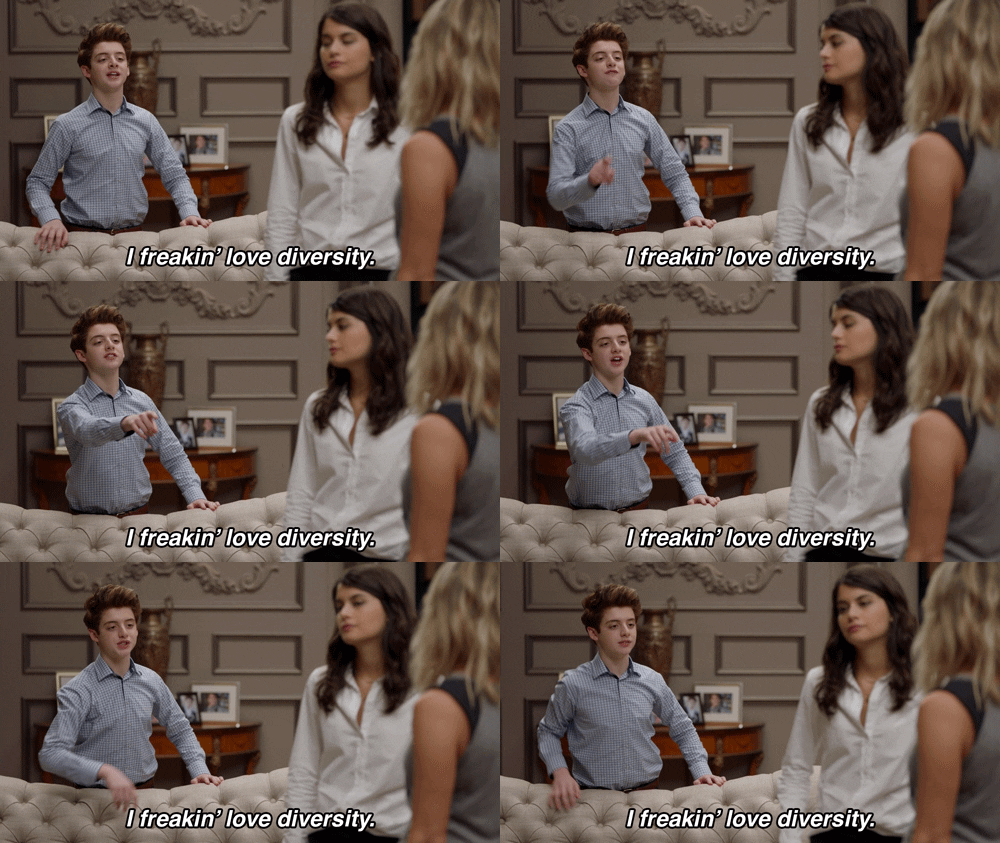
Pictured: Something someone that says they "just don't see color" speaking on diversity
(Source: https://media1.giphy.com/media/3ogsjUeIUkMzM5qIta/giphy.gif)
Friday, April 20, 2018
Nostalgia in nature
When I tend to think of nature, I think of it in either two ways: mysterious force not to be reckoned with, and a mirror to the past, beautiful, peaceful, and a memory instigator. That’s probably not the right word but it’s the best I could think of. Why do we think of nature in either two ways. I feel like it’s a very black-and-white with thinking about it when nature itself has many different colors. There were times when I like to think back and think of my grandfather on the dock with his dog watching the sunrise. Peaceful water and a nice trip to woods made the day worthwhile. And then I think of my friend and I at 4 o’clock in the morning, without the dog, finding ourselves almost being chased by deer with green glowing eyes at 4 o’clock in the morning. Can we try to think of nature as it really is. The good the bad, apparently the seductive, and everything in between?
Where are the birds
From Rachel Carson's Silent Spring, where she included an excerpt from the Milwaukee Journal "The greatest enemy of insect life is other predatory insects, birds, and some small mammals, but DDT kills indiscriminately, including nature's own safeguards or policemen... In the name of progress are we to become victims of our own diabolical means of insect control to provide temporary comfort, only to lose out to destroying insects later on? By what means will we control new pests, which will attack remaining tree species after the elms are gone, when nature's safeguards (the birds) have been wiped out by poison?"

Ya boi Sheev loves ecocriticism

Have you ever heard the Tragedy of Darth Croco the Dile?
Source:https://i.imgur.com/IbidzPX.jpg
I have really enjoyed Ecocriticism, which may not be apparent because my standard mode in class is "silence with a few interjections". But the concept of being seduced by nature as in The Yellow Woman was my immediate, go-to understanding of the story; the concept of desiring something nearly tangible in the environment as in Land and Language of Desire came naturally to me—pardon the pun.
Maybe its my yoga practice, trying to see the beauty and equality of all things, maybe its having grown up outside of a city, sweating and stargazing outside, maybe its something else, I don't know—I'm just totally on board with this critical school of deep melancholy, joy, and personal experience.
With that in mind, my question does veer toward the personal rather than the theoretical:
Is there a specific place in nature that you've felt truly free—liberated—at peace? Where? Why? This has happened to me only once.
If that's too esoteric: where is your favorite place that you've discovered in nature? Why?
Backlash From Greediness
What I thought was a big take away from Silent Soring is how easily we can take advantage of nature. It is kind of selfish, or careless, to do something (such as spray DDT) without knowing the implications of it. It seems like nature and all the animals and insects that inhabit nature were just an afterthought, if even that. The story can lead you to believe that no one seemed to even think about how DDT can effect nature until birds started to due at alarming rates. Nature should not be the Guinea pigs in testing whether DDT causes any implications to others. In addition, as the killing makes its way through the food chain, what does that mean for us? We are at that top of the food chain. In reality, it does seem like we can let our own greediness and strong want for money to be more important that our own safety and health concerns.
Romaine Lettuce

Recalls have been prevalent lately, with 2 different products currently being recalled (eggs and romaine lettuce). Sanitary measures were not correctly followed, for it is more important to these companies to produce products fast to make a lot of money. Our health is deemed less important.
Who knows, maybe recalls would not be so prevalent if we weren't so focused on mass producing products for financial gains. The monopolizing of these businesses to have thier products everywhere is part of the problem. Instead of people getting sick in multiple areas (I believe it is something like 11 different states that are effected), the sickness would be contained to one area if this product just remained in the state where is was manufactured.
Romaine Lettuce

https://get.google.com/albumarchive/117817050372834841987/album/AF1QipNokgI3FI0Zd6ZqLr2tgpNUHcL-y4s7PMyxMkIq/AF1QipOdK1zvKERTDfILbRlSCFwQaQ8fVVvM7EArf43u
Who knows, maybe recalls would not be so prevalent if we weren't so focused on mass producing products for financial gains. The monopolizing of these businesses to have thier products everywhere is part of the problem. Instead of people getting sick in multiple areas (I believe it is something like 11 different states that are effected), the sickness would be contained to one area if this product just remained in the state where is was manufactured.
Thursday, April 19, 2018
In which I get too deep about my relationship with nature
 So I’ve been thinking about Dr. Gottfried’s question of when we were last in nature, and I’m not sure where nature “is”. My initial thought was the hike I took with my sister over spring break in the mountains, where we slugged through mud and snow, and talked for hours. Spending time with my sister seems completely natural, yet I felt out of place there on the mountain. I don’t hike often, and that was her home not mine. I was just a visitor on that wooded path—I was an outsider, admiring the beauty of it all. I’m not out in nature very often, so maybe I’m just not used to the quiet or calm or warped sense of time. Don’t get me wrong though, it was beautiful and I enjoyed myself but more for the company than the place. It’s almost like I was uncomfortable in nature. I felt like I was trespassing on something so much greater than myself, and that seemed wrong. But I also think maybe these are times where most people aren’t comfortable out in nature because we’re not used to it. Or maybe it’s just me.
I also realized I was kind of out in nature Wednesday afternoon. I got out of class early and the sun was shining, so I went for a walk. I ambled around downtown and the park, then I found a bench and sat with my eyes closed and face turned toward the sun. I love that feeling (and now have sunburn) but does that count as nature? It’s a manmade park with neatly cut grass and it’s right next to a road and neighborhood. Does my little slice of sun merit being considered “nature”? Maybe it does, maybe it doesn’t, but it feels more nature-y to me because I feel at home in it.

Nature is Talking, and We're Not Listening
If I understand ecocriticism correctly, then it is about how nature is portrayed in literature/media, how it's used as a setting, a plot device, what have you, and even about bringing attention to the environment that surrounds us. We as humans don't pay enough attention to nature, and, as was mentioned on Wednesday, it's trying to tell us something. Every time we don't listen, and every time nature gets angrier. Something that comes to mind when thinking about how humans as a whole disregard nature and their impact on it is the movie Wall-E. Hopefully, we all know the story behind Wall-E. Humans trashed their planet to the point that they could no longer live on it, and were forced to move into space. They left behind only robots to clean up their trash, and periodically sent drones down to see if the planet has become habitable yet. A lot happens between that idea and the end of the movie, but you get the gist. It's very blatantly saying that if we don't respect the planet, at some point there won't be a planet left to live on.


https://giphy.com/gifs/disneypixar-disney-pixar-zqXnds4QxHRZK
Don't let the planet get to the point that this tiny, tiny plant is a beyond-rare find.
Is there an outside of Nature?
(This post may need some gesticulation or a chart when we discuss it, because I am curious (and a little confused) about my question)
As we discuss Ecocriticism this week I have been thinking about the world outside of what is considered “Nature”, or possibly what is considered “Nature”. Is space and the universe considered Nature or is it outside of the realm of the setting that interacts with the characters, or is space lumped into the space of interaction in the text. If space isn’t considered Nature, is it because our Nature is man-made? Or is our Nature not man-made but a product of what came before the text? Can consider Nature outside of the text because the text is in the same realm, or should we only regard the Nature within the text, or the time period it is written in? I ask these questions because of the chart we viewed for Deconstruction week, guess Derrida stuck around in my head more than I expected him to.
As we discuss Ecocriticism this week I have been thinking about the world outside of what is considered “Nature”, or possibly what is considered “Nature”. Is space and the universe considered Nature or is it outside of the realm of the setting that interacts with the characters, or is space lumped into the space of interaction in the text. If space isn’t considered Nature, is it because our Nature is man-made? Or is our Nature not man-made but a product of what came before the text? Can consider Nature outside of the text because the text is in the same realm, or should we only regard the Nature within the text, or the time period it is written in? I ask these questions because of the chart we viewed for Deconstruction week, guess Derrida stuck around in my head more than I expected him to.
(Also, nature...Nature?)
(Source: https://giphy.com/explore/space)
The Earth and You (and Literature)
I have always been enraptured by and appreciative of the environment, so this theory fits well with me on multiple levels. And I realized that this theory showcases literature's unheralded hero: setting. I once had an assignment in high school that forced me to focus on place, and how it influences the story, almost becoming a character in its own right (the assignment was officially coined "talking about place"). Ecocriticism works not only to defend the environment, but to call attention to the various ways it's used in literature. Of course, there are stories/poems that utilize it more than others, but I believe this criticism provides a wonderful perspective that helps us understand the way humans tell and have always told stories, in that it's not just about the words and actions of the characters, but of the environment they are surrounded by. Whether we acknowledge it or not, we live and breathe and grow with the earth, and our literature reflects that living and dying.
Overall, Ecocriticism strongly reminds me of New Historicism, Cultural Studies, and Marxism because of its reliance on observing the world surrounding the writing (such as peoples' responses and views about the planet). I feel like this criticism blends well with the others we've studied throughout the semester, proving that all of these schools of thought intertwine in fascinating, and sometimes subtle, ways.
https://i.pinimg.com/736x/5e/2c/2d/5e2c2dfa5d7bf833814d7d3237732819--epcot-the-land.jpg
Overall, Ecocriticism strongly reminds me of New Historicism, Cultural Studies, and Marxism because of its reliance on observing the world surrounding the writing (such as peoples' responses and views about the planet). I feel like this criticism blends well with the others we've studied throughout the semester, proving that all of these schools of thought intertwine in fascinating, and sometimes subtle, ways.
 |
| Plaque says: "Symbiotic relationships mean creative partnerships. The earth is to be seen neither as an ecosystem to be preserved unchanged nor as a quarry to be exploited for selfish and short-range economic reasons, but as a garden to be cultivated for the development of its own potentialities of the human adventure. The goal of this relationship is not the maintenance of the status quo, but the emergence of new phenomena and new values." |
Nature, Nature, And More Nature!
 |
| Here's a picture of my cat Louie. He's so calm and I've had a stressful week so here's my calm cat to help me and anybody else who's stressed. |
Friday, April 13, 2018
My Brain Has Been Deconstructed
Well, this has been an interesting week...I’ve just learned that words are technically meaningless and cannot express meaning. Everything seemed like a fog last class so just when I thought I was understanding some of Derrida’s language and ideas, I was sucked back into the thoughts of “Huh?...”
I love the French language, but not necessarily the aggravating philosophers of the 1950s. Maybe it is just the translation to English, but I just get so confused. It seems like he wants to fool with you in his writing. They also claim a text “can be read as something quite different from what it appears to be saying” that means the text can prevent its purpose and betray itself.
That being said, I've looked up pictures of Derrida and was surprised to find this
It's true.
Subscribe to:
Posts (Atom)